 Karmakar Klasses
Teaching is my heritage. Science is my craft.
For centuries, the name Karmakar has belonged to the artisan. They were blacksmiths. It was understood that no tool could hold its edge without a foundation of absolute precision. If a thing was to be made, it was to be made to last.
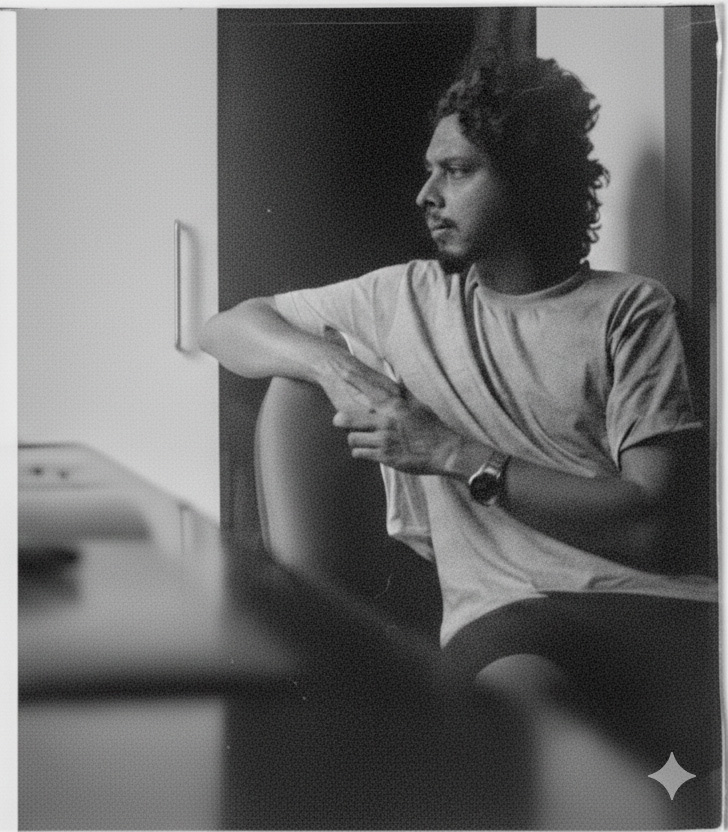
I was raised by a different tradition. My parents and grandparents were teachers. I have seen the world being made a better place, one student at a time. I look up to this tradition. It is my heritage.
I aspire to forge this name anew. I apply the craftsman's eye to the Science of Learning. I intend to build academic foundations so strong they do not crack.
We are artisans of the logical mind, builders of scientific thinking.
I want students to receive more than a syllabus. I want them equipped with the logic to master the world.
Dr Susnata Karmakar
Founder & Academic Director · University of Cambridge
Bridging global research with secondary mastery.
For over a decade, I worked in some of the world's most advanced laboratories, most recently at the frontier of research at the University of Cambridge. I have seen where true science is born: not in the mass accumulation of facts, but in a logical architecture that withstands the pressure of discovery.
Traditional schooling often reduces science to a series of labels to be memorised, treating the mind as a storage unit rather than an active processor. I founded Karmakar Klasses to shift this paradigm. We bring the structural logic used in global research back to our local roots. We don't just teach the syllabus; we build a researcher's lens, so students have the structural thinking to master the complexity of life.
BSc in Chemistry, Genetics and Biotechnology
First Class
MSc in Genomics
DBT-IPLS Fellow
PhD in Biological Sciences
Ran a multi-year research project from design to publication, trained undergraduates in lab work and microscopy, and supervised Master's students. ICMR Senior Research Fellow.
University of Cambridge
Led an independent line of research on how genes guide the developing nervous system, presented it at international conferences, and mentored Master's students.
Founder and Academic Director
Leads The Collective in building our science courses, and reviews every resource for accuracy and clarity.
Questions at the frontier of biology.
The same habits of mind, asking how a thing works and checking the evidence, shape every lesson we build. Peer-reviewed research in PLOS Genetics and Molecular Biology of the Cell.
How genes build a brain
Studying the genetic master switches that decide how a developing nervous system takes shape.
How cells move as a team
Investigating the clean-up systems inside cells that let groups of cells travel together through a living body.
Three convictions behind every lesson.
If you can picture it, you understand it.
A student who can see how a cell or a force works has understood it; a student who can only label it has memorised it. So we show the structure before we name it.
Ask how we know, not only what we know.
We treat Class 9 science with the care of a research paper. Students learn the evidence behind each idea, so their answers rest on reasoning they can explain.
Students who think for themselves.
Inspired by Sugata Mitra's self-organised learning, we help students move from listening to exploring, until they can ask good questions of their own.
“Success is a delayed response to the foundation built today. Let's build it with the rigour of a researcher and the curiosity of an artist.”